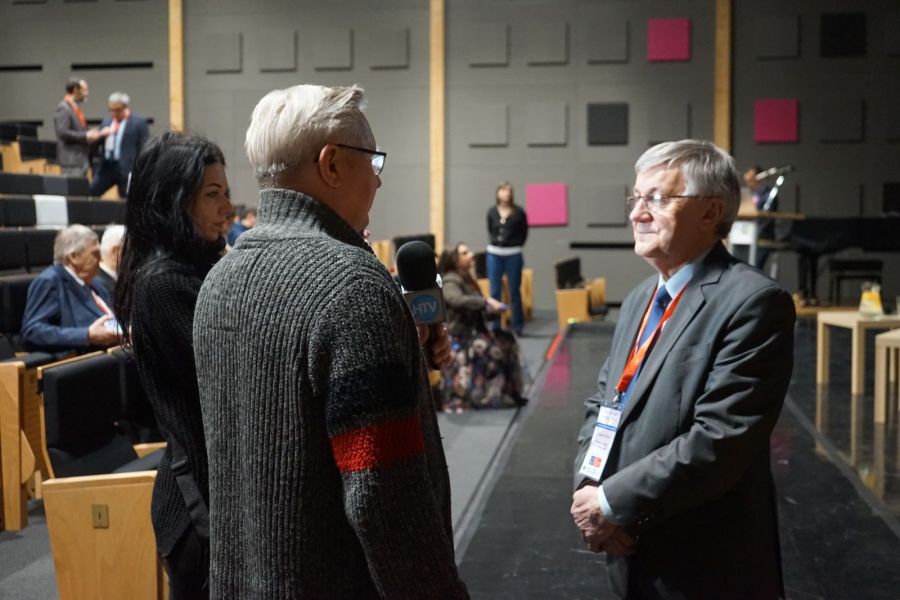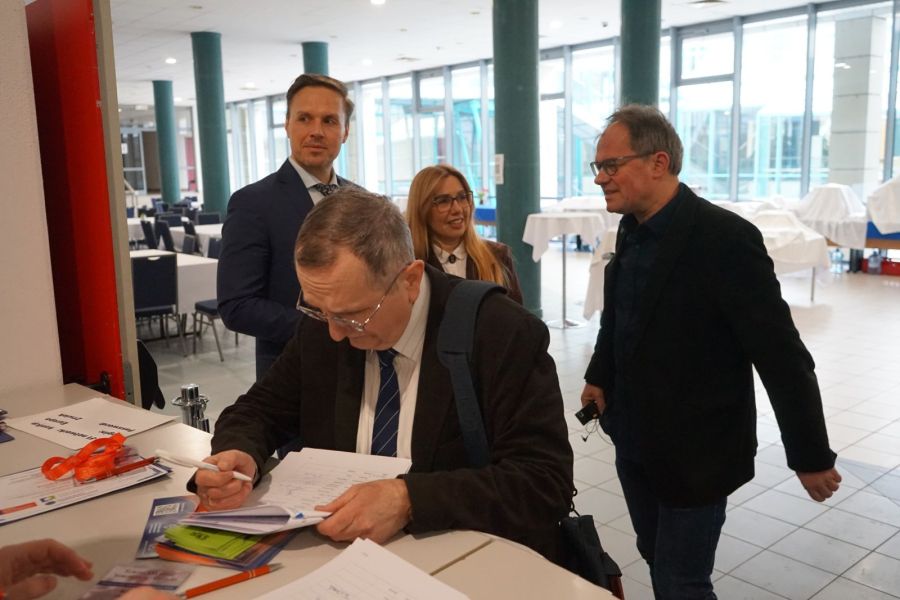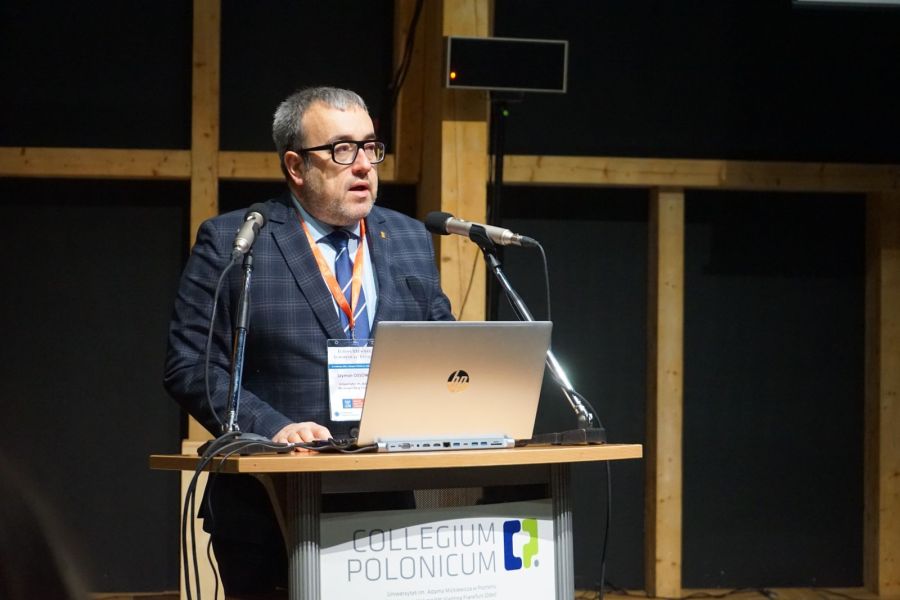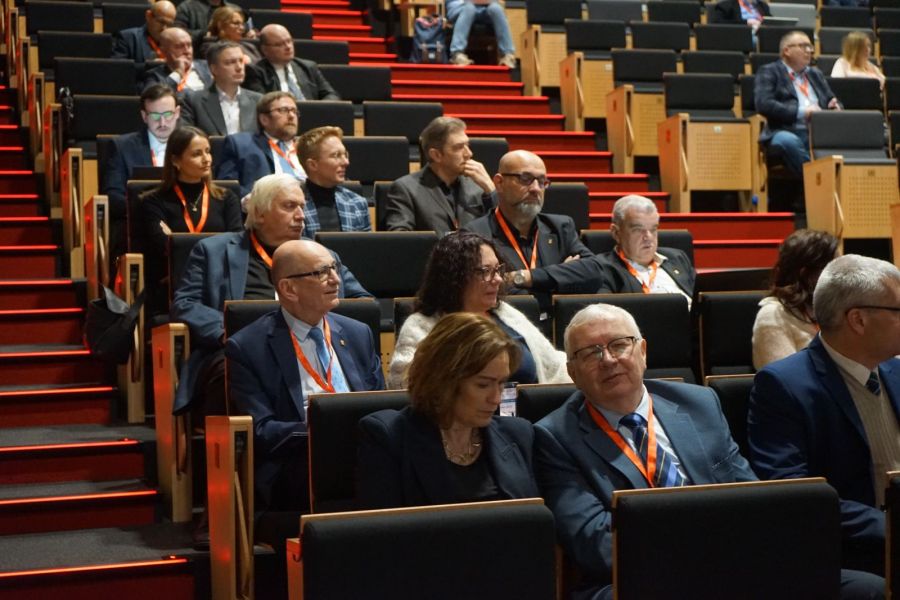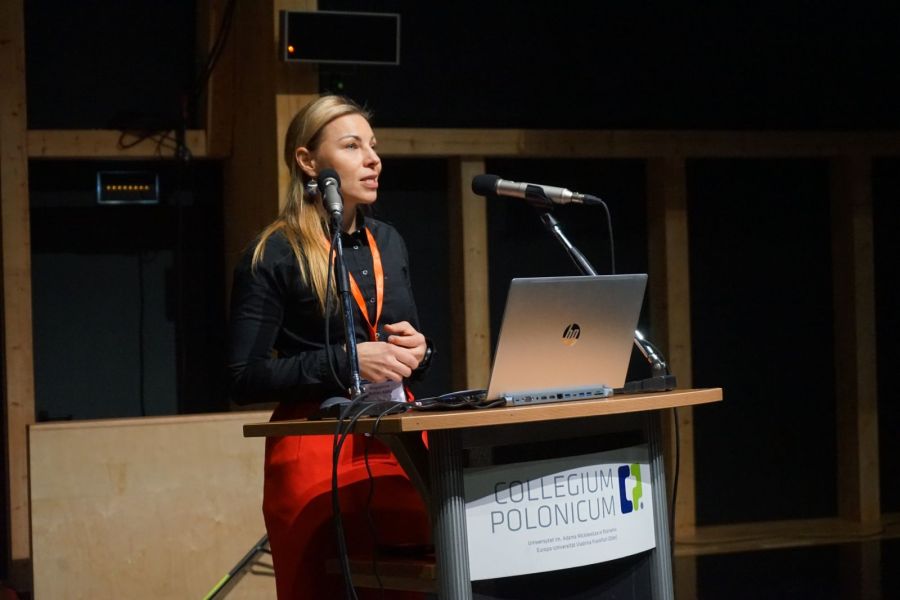

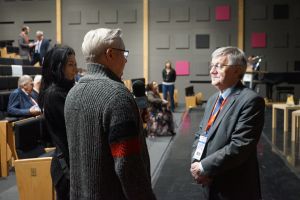
On Thursday and Friday (4-5 February), the 26th International Scientific Conference in the "Europe of the 21st Century" series was held at the Collegium Polonicum in Słubice. The event brought together 170 researchers and experts from Poland and abroad, with the largest number coming from Ukraine, Germany and Kazakhstan. The participants discussed the key challenges facing contemporary Europe.
The conference was opened by the Rector's Representative at Adam Mickiewicz University, Poznan, and Chairman of the Conference Organising Committee, Prof. Tadeusz Wallas, emphasising the international character of the event and its significance for research on politics, security and the resilience of European countries. Other speakers included: Dean of the AMU Faculty of Political Science and Journalism, Prof. Szymon Ossowski, Chair of the Political Science Committee, Prof. Magdalena Musiał-Karg, Chair of the Political Science Committee, Prof. Jolanta Itrich-Drabarek, Słubice Mayor Marzena Słodownik, and Collegium Polonicum Administrative Director Dr Bartosz Jagura.
In accordance with the long-standing conference tradition, representatives of renowned academic centres from Poland and abroad were the first to speak at the plenary session. Prof. Timm Beichelt (European University Viadrina, Germany) presented a paper entitled “Zeitenwende – is Germany capable of European resilience?”. Subsequently, Prof. Yuriy Matsiyevsky (National University “Ostroh Academy,” Ukraine) delivered a speech entitled “Russia's War, Ukrainian Resistance, and Its Implications for Central and Eastern Europe,” and Prof. Joachim Diec (Jagiellonian University) discussed the topic “The Effects of Globalisation on Europe in the 21st Century.”
The second plenary panel began with a presentation by Dr Yuliia Nesteriak (Taras Shevchenko National University of Kyiv, Ukraine) entitled “The Media Dimension of Ukraine's Resilience During Wartime.” It was followed by remarks from Prof. Tomasz Brańka (Adam Mickiewicz University, Poznań) with a paper entitled “Between autonomy and the geopolitics of superpowers: the importance of Greenland for Europe's resilience and security,” and Prof. Grzegorz Janusz (Maria Curie-Skłodowska University), who presented a speech entitled “Dimensions of Poland's security and threats to it in an unstable international environment.” The plenary session on the conference's first day was closed by Prof. Tadeusz Wallas's presentation entitled “Key determinants of the European Union's resilience to security threats.” The first day of the conference featured extensive substantive discussions and an exchange of research experiences.
The second day of the conference was devoted to panel discussions. A total of eight thematic panels were held, during which participants debated current political and security challenges and processes occurring in contemporary Europe. One of the recurring threads was the role of the media in modern conflicts and political processes, including their relevance to the resilience of states and societies. The conference deliberations were summarised and officially closed by Prof. Tadeusz Wallas, Chairman of the Organising Committee.
The conference was organised by the AMU Faculty of Political Science and Journalism and the Collegium Polonicum in Słubice, with the support of the Centre for European Research and Education, the Polish Political Science Association – Poznań Branch, and the Institute of National Remembrance – Poznań Branch.