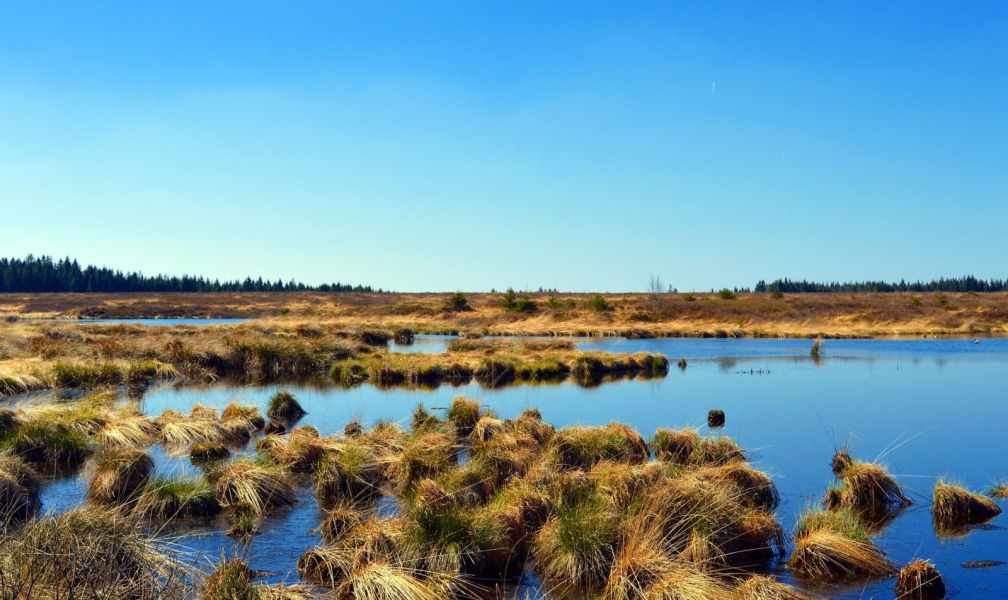


Can peatlands be effectively restored following drainage? The latest research from an international team of scientists, published in the journal Ecological Indicators, indicates that one factor is crucial: the water level.
The co-authors of the article include Prof. Mariusz Lamentowicz from the AMU Faculty of Geography and Geology and Dr Mateusz Draga from the AMU Faculty of Biology. The researchers analysed peat cores from various regions of Europe, integrating palaeoecological, geochemical, and biological data, including vegetation composition, peat decomposition, and the presence of shell amoebae. This multi-indicator approach allowed them to reconstruct changes in hydrological conditions in the past and assess their impact on the functioning of peatlands.
The results are clear: high and relatively stable water levels favour peat accumulation and the dominance of sphagnum mosses, key plants for carbon sequestration. When the water level drops, peat begins to decompose more quickly, the availability of nutrients increases, and the composition of vegetation changes. In turn, this leads to a loss of the peatlands' ability to effectively store carbon and retain water.
A significant finding is the identification of an approximate hydrological threshold that promotes the restart of peat formation processes. Research indicates that maintaining a water level approximately 10 ± 5 cm below ground level can help restore peatland functions. However, scientists emphasise that renaturation does not always lead to a complete restoration of the original state – new, transformed ecosystems often emerge. Nevertheless, these ecosystems can recover key environmental functions, such as carbon storage and water retention.
The results obtained are of considerable practical importance. It can serve as a basis for planning and evaluating the effectiveness of peatland conservation and restoration measures, particularly in the context of climate change adaptation and mitigation.
The research was funded under the Biodiversa+ and Water JPI (BiodivRestore ERANET Cofund, GA No. 101003777) competition, with funds from the European Union and the following funding institutions: the National Science Centre, DFG, FWF and the Ministry of Agriculture and Rural Development.