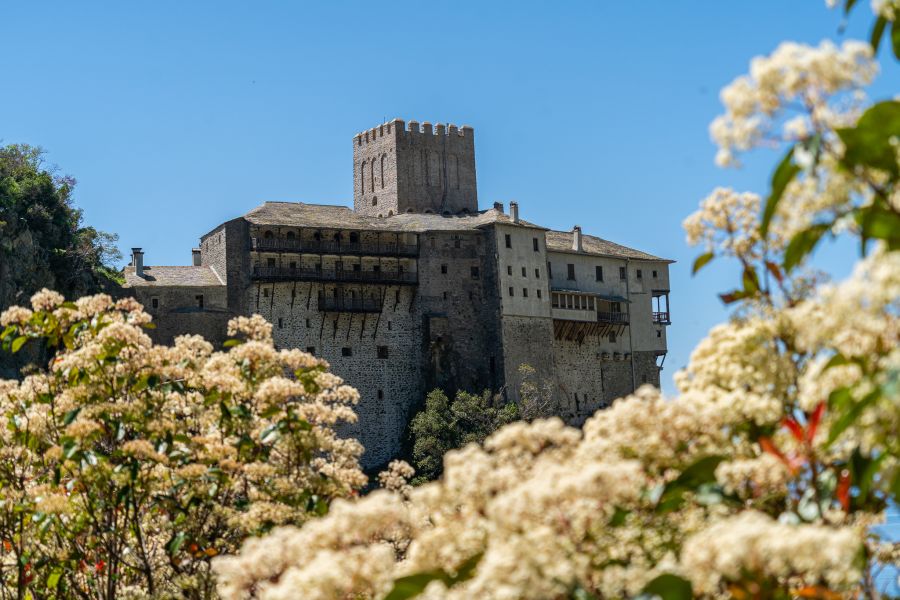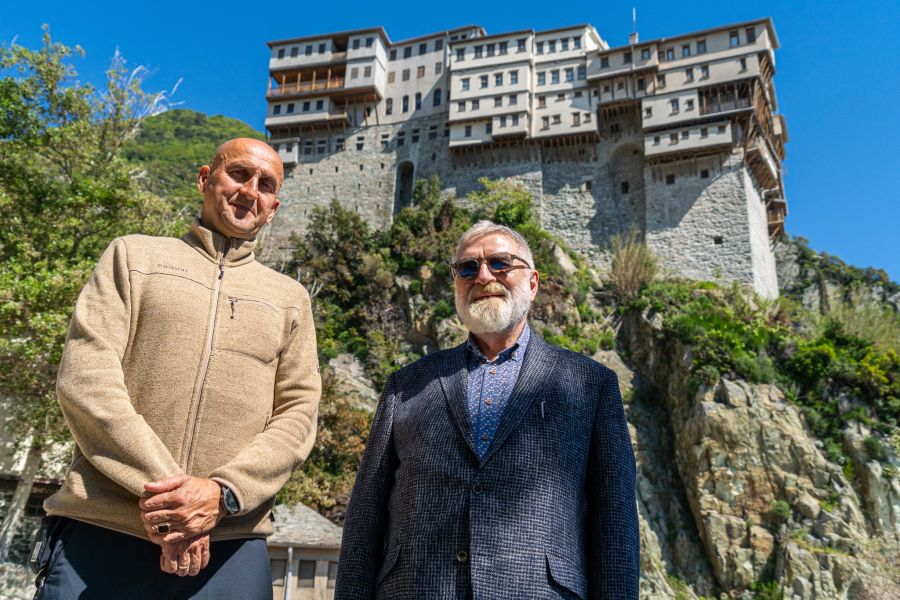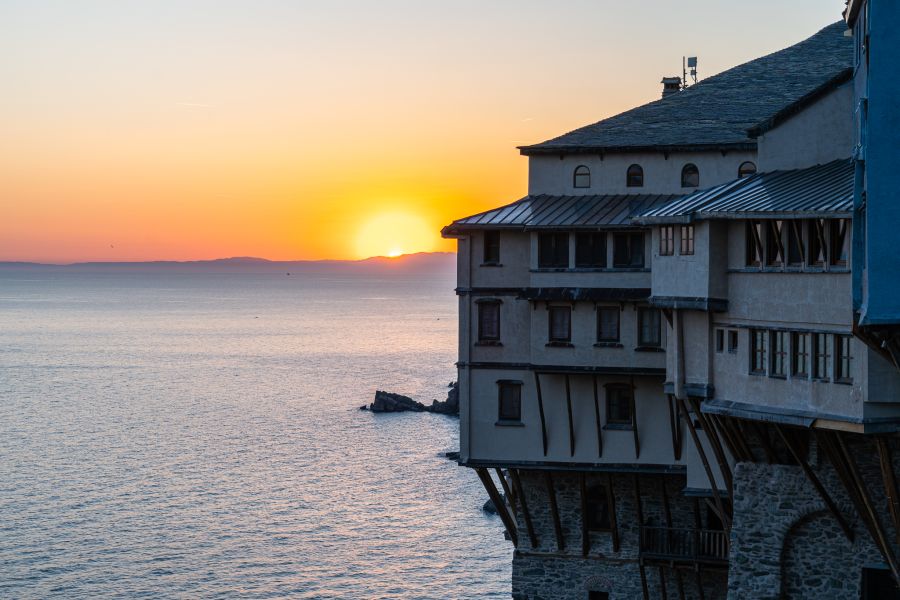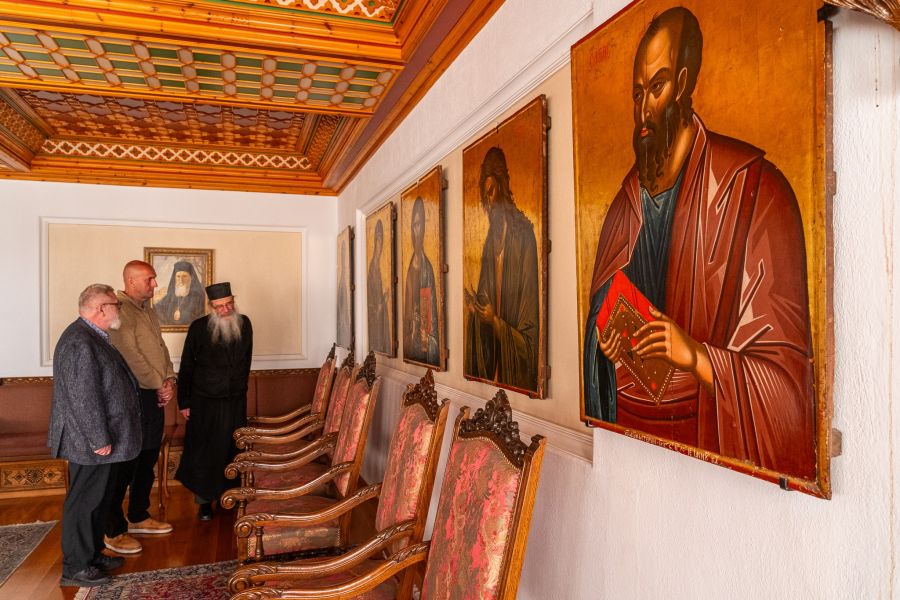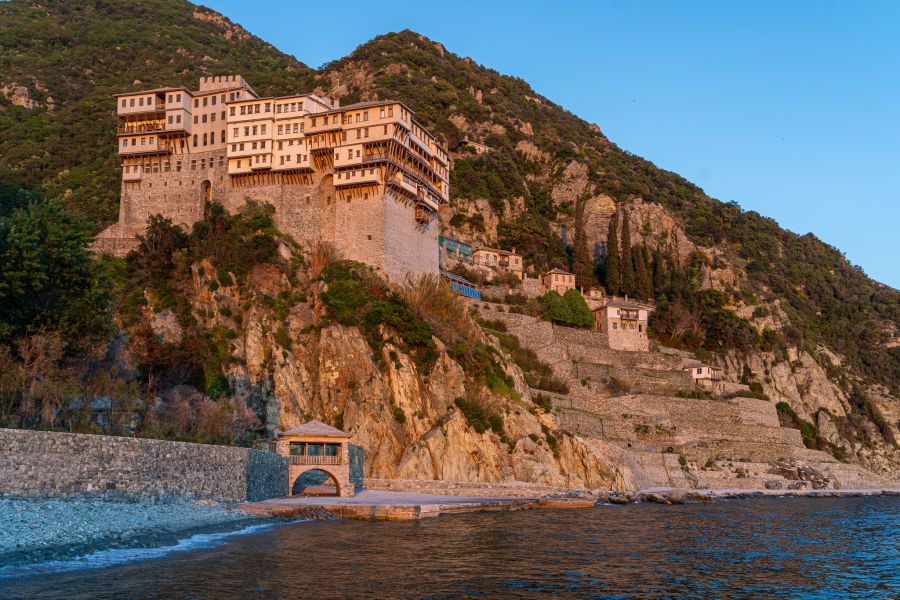


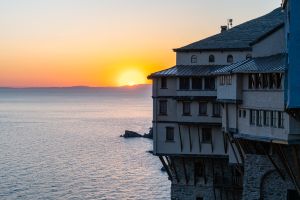
Members of the Interdisciplinary Humanities Research Unit of the AMU Faculty of Polish and Classical Philology – comprising Prof. Aleksander Wojciech Mikołajczak, Prof. Rafał Dymczyk and Dr Kostiantyn Mazur- conducted research on Mount Athos last month. The research focused on the frescoes from the Monastery of St Dionysius, depicting a cycle of 21 frescoes of the Apocalypse according to St John.
Prof. Aleksander Wojciech Mikołajczak and Prof. Rafał Dymczyk, while working on a book in which they discuss the history and significance of the cycle, participated in over twenty research expeditions to Mount Athos. They were accompanied on their journey by Dr Kostiantyn Mazur, who photographed the frescoes and the Athos landscapes, as the photographs will form an essential part of the aforementioned publication.
Mount Athos is a living open-air museum of Byzantium. It is a place where, since the 11th century, a rule known as Avaton has been in force, prohibiting access to women and all female animals, with the exception of wild birds and cats.
The place is undoubtedly the spiritual centre of Orthodoxy, currently home to 20 monasteries, 17 of which are Greek and 3 Slavic: the Serbian monastery of Chilandar, the Bulgarian monastery of Zograf and the Russian monastery of St Pantaleon.