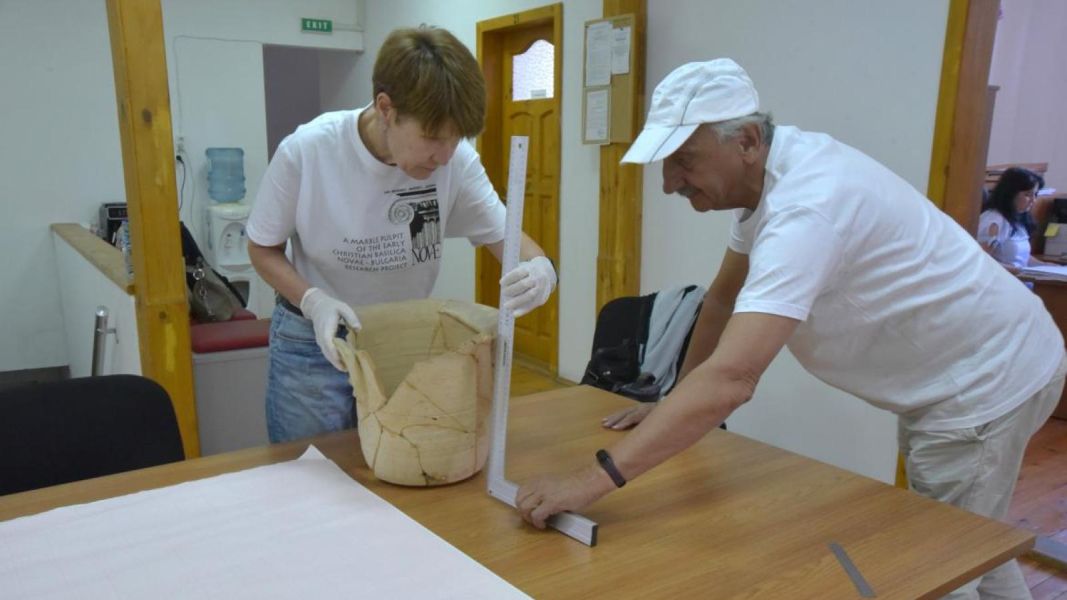


Analysis of Roman chamber pots from Novae and Marcianopolis has revealed previously unknown information about parasites from 1,800 years ago. A team led by AMU Prof. Elena Klenina has confirmed the presence of Cryptosporidium parvum in Europe for the first time, changing our understanding of the history of parasitic diseases.
Polish scientists have published a new article on the discoveries at Novae and Marcianopolis, Roman towns situated on the lower Danube. The ancient chamber pots have now become the subject of research—unique in Europe—at the intersection of history, archaeology and palaeoparasitology.
The paper appeared in npj Heritage Science, a prestigious, highly ranked open-access scientific journal published by Springer Nature. The study immediately attracted considerable interest from the international scientific community – within just four days following publication, it had been downloaded 899 times!
The research was conducted by an interdisciplinary team led by Prof. Elena Klenina, with the participation of Prof. Andrzej B. Biernacki, Renata Welc-Falęciak, PhD, Agnieszka Pawełczyk, PhD, and Małgorzata Bednarska, PhD, researchers from Adam Mickiewicz University, Poznań, the University of Warsaw and the Medical University of Warsaw. IDUB UAM funded the project.
The chamber pots are a valuable source of information for scientists regarding the health of ancient communities. The mineralised urine and faecal deposits preserved on their walls enable the identification of traces of intestinal parasites and infectious diseases.
– Reconstituting the daily lives of ancient people, particularly their diet and health, is a huge challenge. The chamber pots provide us with direct insight into the health problems of ancient inhabitants – emphasise the study authors.
Read the full article in Polish at: https://www.uniwersyteckie.pl/nauka/nocniki-z-novae-odslaniaja-historie-chorob
Text: Ewa Konarzewska-Michalak
Pictured from left: Prof. Elena Klenina and Prof. Andrzej B. Biernacki