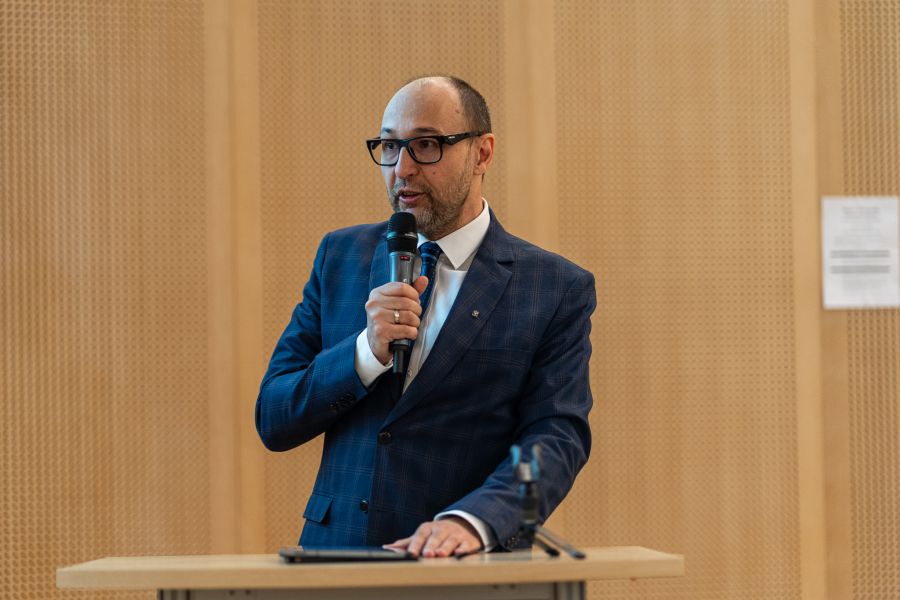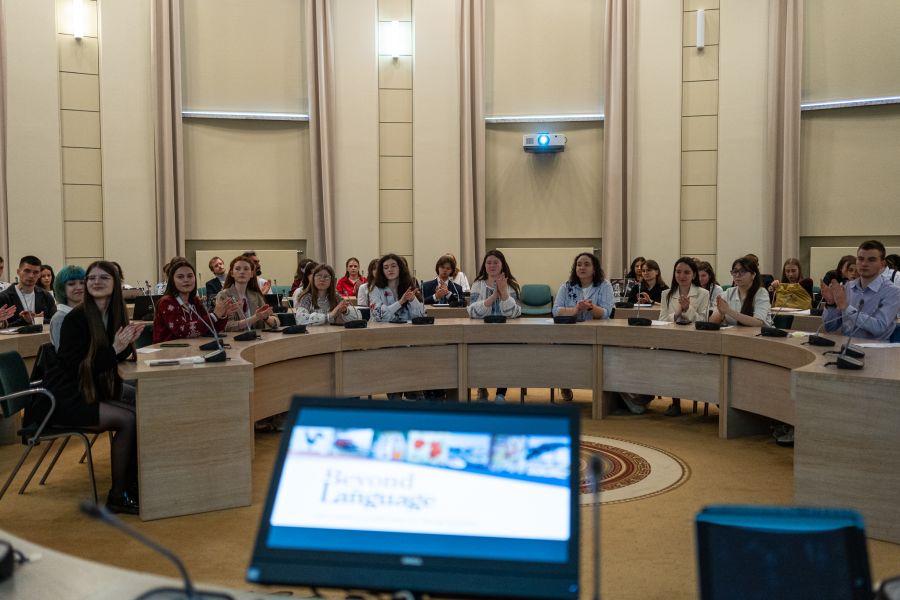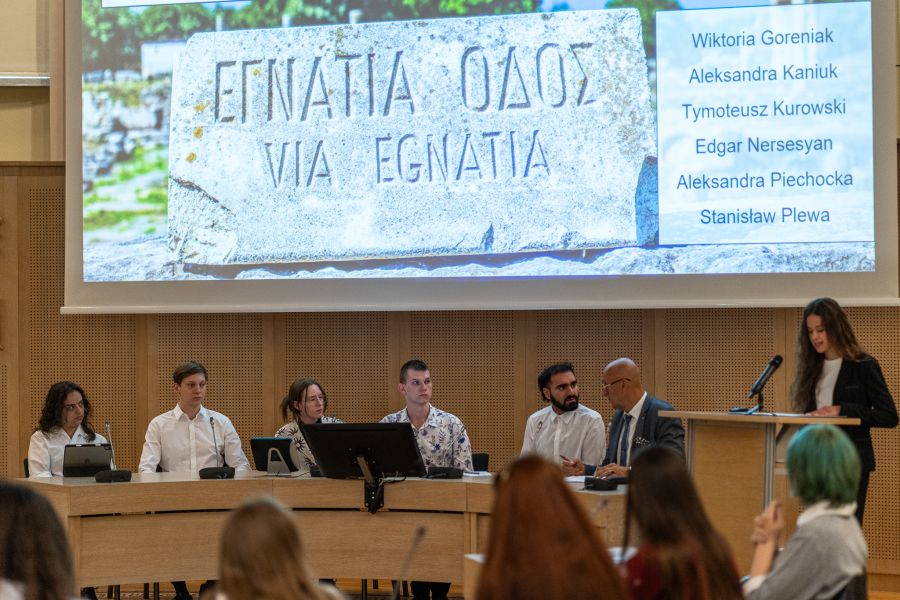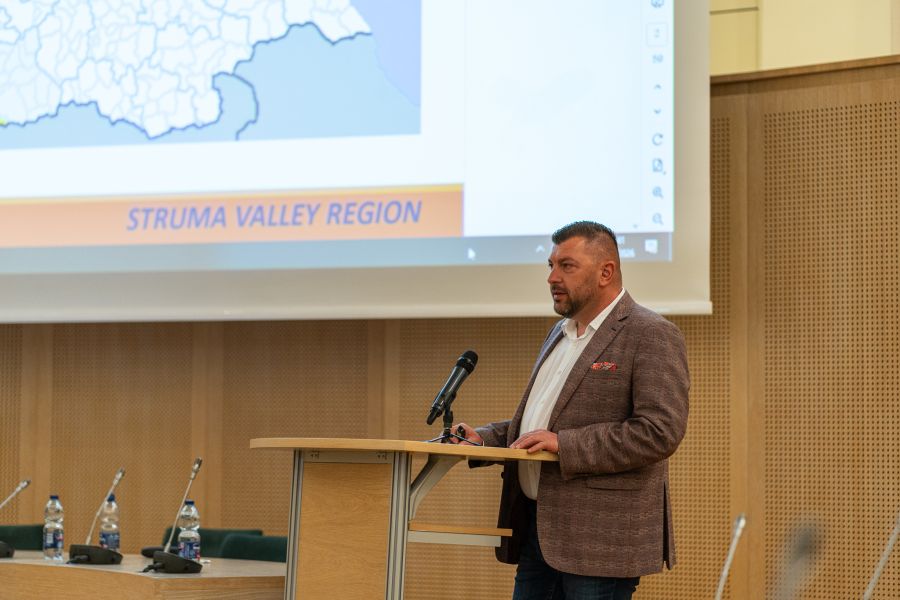
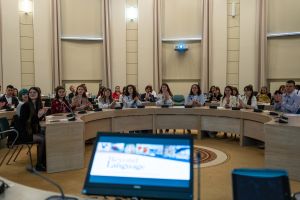
On 4 May, the Mickiewicz Hall at Collegium Maius hosted the international interdisciplinary academic conference ‘Beyond Language 2026’. The event forms part of a major conference series taking place over the coming days in Warsaw, Lublin, Wrocław, Lviv, Rome, Bucharest, Sosnowiec, Kraków, Łódź and Vienna. It has been organised for several years together by the MSI College of the University of Wrocław, the Interdisciplinary Humanities Research Unit of the AMU Faculty of Polish and Classical Philology (WFPiK) and a group of co-organisers that grows year on year.
The session in Poznań, led by Prof. Rafał Dymczyk, Prof. Aleksander Mikołajczak, and Prof. Konrad Dominas, examined the Roman road, the Via Egnatia, from an interdisciplinary perspective. Nearly 80 participants shared their insightful and thought-provoking findings. They discussed issues related to the construction, use, and preservation of the remains of this significant road from the Roman, Byzantine, and Ottoman Empires, which now spans Albania, North Macedonia, Bulgaria, and Greece. Students from the Interdisciplinary Individual Studies (MSI) and Liberal Arts and Sciences (LAS) programs, along with guests from twelve Ukrainian universities, have prepared speeches. Prof. Ilan Roth from the University of California, Berkeley, attended the conference as a distinguished guest; on 7 May, he will join a research expedition to the Balkans organised jointly by MSI and LAS.
The official opening of the ‘Heraclea Sintica’ exhibition served as a side event to the conference, attended by representatives of the Bulgarian municipality of Petrich, the Vice-Rector of Adam Mickiewicz University, Poznan, Prof. Michał Banaszak, and the Deans of the Faculty of Polish and Classical Philology, Prof. Krzysztof Skibski, and the Faculty of History, Prof. Przemysław Matusik. The event was held under the patronage of the Honorary Consul of the Republic of Bulgaria in Greater Poland, Prof. Rafał Dymczyk.
Photo by Kostiantyn Mazur, PhD
Source: Prof. Rafał Dymczyk