

Following the publication in Nature Communications, the historical community – and beyond – has been abuzz. The debate has intensified due to genomic analyses conducted in collaboration with researchers from Adam Mickiewicz University, Poznan, indicating that the Piast dynasty likely originated from outside Poland.
Among the researchers from our university involved in the study were: Prof. Hanna Koćka Krenz, Prof. Tomasz Jasiński, Prof. Józef Dobosz, Prof. Marzen Matla, PhD Anna Juras, PhD Maciej Chyleński, Dawid Trzciński and Aleksandra Losik.
The work devoted to the genetic genealogy of the Piasts – Poland’s first royal dynasty – is entitled: Genetic genealogy of the Piast dynasty and related European royal families. The researcher behind the study and the head of the team that carried it out is Prof. Marek Figlerowicz from the Institute of Bioorganic Chemistry of the Polish Academy of Sciences.
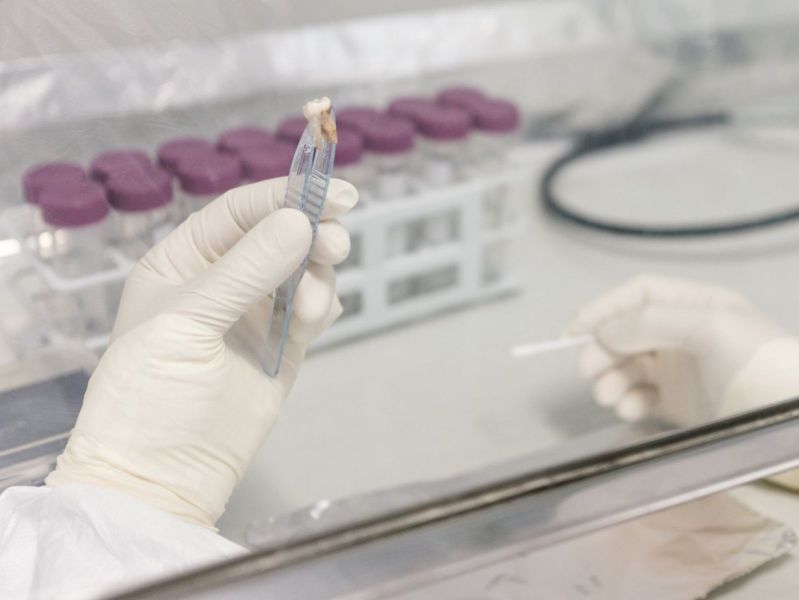
As stated on the Polish Academy of Sciences website (Genetic Genealogy of the Piasts in Nature Communications), the study presents an analysis of Piast burial sites scattered throughout Poland. In eight of these sites, remains of 33 individuals were found, most likely belonging to members of Poland’s first royal dynasty. Multidirectional archaeogenomic analyses confirmed the identity of ten Piasts. Based on the genomic data obtained, maternal lines (mitochondrial haplogroups) were identified, linking the identified Piasts to over 200 historical figures from 10 European royal dynasties. This group includes 108 Piasts, 32 Rurikids, 12 Gediminids, 23 Árpads, 15 Přemyslids, 13 Hohenzollerns, 10 Habsburgs, 8 Wettins, 5 Anjou and 4 Wittelsbachs.
As stated on the Polish Academy of Sciences website (Genetic Genealogy of the Piasts in Nature Communications), the study presents research into Piast burial sites scattered throughout Poland. In eight of these sites, remains of 33 individuals were found, most likely belonging to members of Poland’s first royal dynasty. Multidirectional archaeogenomic analyses confirmed the identity of ten Piasts. Based on the genomic data obtained, maternal lines (mitochondrial haplogroups) were identified, linking the identified Piasts to over 200 historical figures from 10 European royal dynasties. This group includes 108 Piasts, 32 Rurikids, 12 Gediminids, 23 Árpads, 15 Přemyslids, 13 Hohenzollerns, 10 Habsburgs, 8 Wettins, 5 Anjou and 4 Wittelsbachs.
The paternal lineage (Y-haplogroup) identified among the Piasts (R1b-BY3549) is now extremely rare. The same lineage has been found in ancient DNA databases in three individuals from north-western Europe (present-day France, the Netherlands and England) who lived during the Piast era or earlier. The available evidence indicates that the Piasts likely did not originate in the local region. This supports the hypothesis that the state-formation processes occurring in Central and Eastern Europe during the 9th to 11th centuries were influenced not only by local elites but also by external groups.
Link to the article: Genetic genealogy of the Piast dynasty and related European royal families